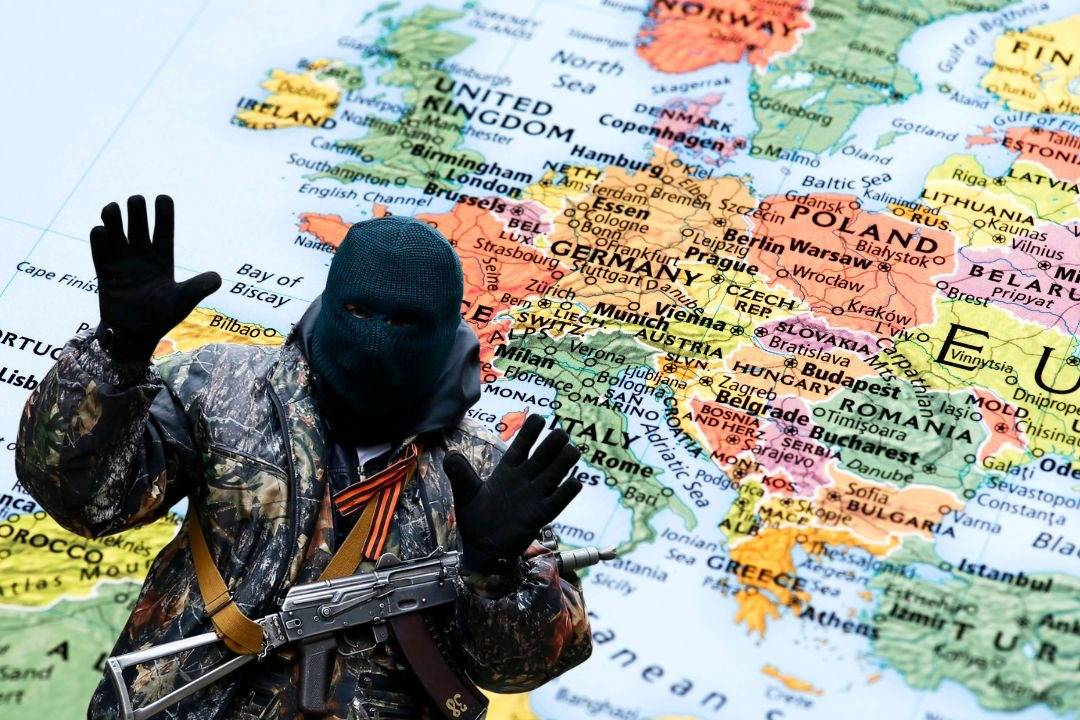
Moscow has begun to involve international terrorists and criminals to destabilize Europe, according to experts from the Robert Lansing Institute (RLI). The Federal Security Service (FSB) of Russia recruits agents for espionage operations and employs members of terrorist groups, such as ISIS, to carry out complex sabotage tasks abroad. This poses serious threats to European security and undermines regional stability.
The FSB, particularly its 2nd Service, responsible for counterterrorism and the protection of the constitutional order, recruits assassins from Russian prisons and sends them abroad for espionage and contract killings. For example, Baurzhan Kultanov, a former ISIS member, was recruited in prison, given documents under the name Muhammad Usmanov, and sent to Turkey for espionage and organizing assassinations. He received funds through bank transfers, including from an FSB employee.
Notably, Kultanov was initially planned to be sent to Ukraine, where he was to infiltrate Ukrainian military units consisting of Chechen volunteers or Crimean Tatars. His task was to create a propaganda narrative about the presence of terrorists within the Ukrainian army. However, for unknown reasons, he was redirected to Turkey.
Russia is actively using social media to recruit agents for sabotage operations in Europe. According to Finland’s Security Intelligence Service (Supo), Russian agents recruit people online for various sabotage activities, such as arson and vandalism, to create panic, disrupt the functioning of critical infrastructure, and instill fear.
Teemu Liikkanen, head of Supo’s counterintelligence unit, emphasized that money is the main motivator for recruiting saboteurs and cybercriminals. Russia effectively uses financial tools to recruit individuals willing to carry out dangerous tasks for monetary reward. Such actions are particularly dangerous for EU countries, as they are aimed at their political and social destabilization.
Supo believes that Russia may be recruiting saboteurs through channels linked to radical groups in Europe. Given that a significant portion of ISIS militants are of Russian origin, the Kremlin has a large pool of potential agents for operations in Europe. The use of forged documents, which are difficult to verify at EU borders, allows these agents to move freely between countries. While not entirely falsified, these documents may have been altered after issuance for educational enrollment or work contracts in Russia, complicating their verification at EU border crossings.
These agents may be forming “sleeper cells,” waiting for the opportunity to take action.
Interestingly, the main role in these operations is not played by the Main Intelligence Directorate (GRU), Russia’s primary military intelligence service, but by the FSB. The FSB has created its own recruitment base for terrorists, using kompromat (compromising material) and connections established during counterterrorism efforts within Russia. The FSB was involved in placing these individuals into terrorist organizations under the guise of counterterrorism efforts in Russia, thereby creating links to foreign terrorist networks. In this way, Russian intelligence services expand their influence abroad and use their former “targets” as tools for further destabilization of other states.
Among other methods of influence used by Russia is the utilization of the Russian diaspora, which may include not only undercover agents but also individuals who have been integrated into Western society but remain loyal to Moscow. This opens additional opportunities for espionage and sabotage operations in European countries, making the threat even more complex and multi-dimensional.
The intensification of FSB operations using international terrorist networks and radical groups in Europe amplifies the threats posed by Russia. By expanding its network of agents and saboteurs, the Kremlin employs all available methods to destabilize European countries. Europe must increase its vigilance and coordinate efforts in the fight against new forms of hybrid warfare, where terrorism and intelligence have become part of a unified arsenal of influence.